Blog

  • Art reflects the world

    Art reflects the world

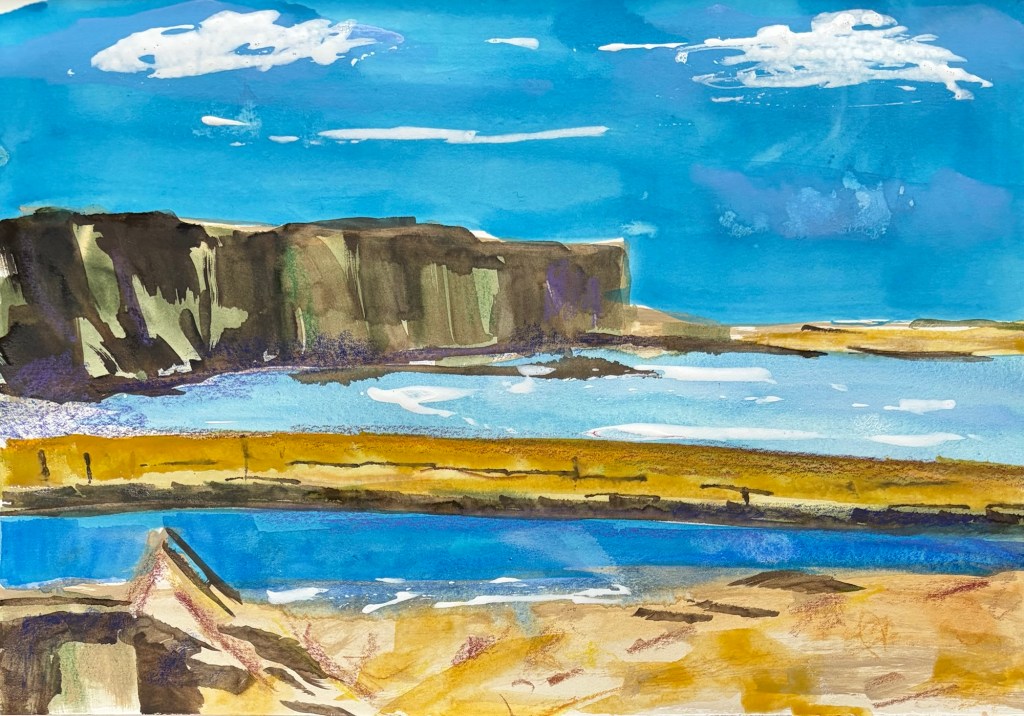
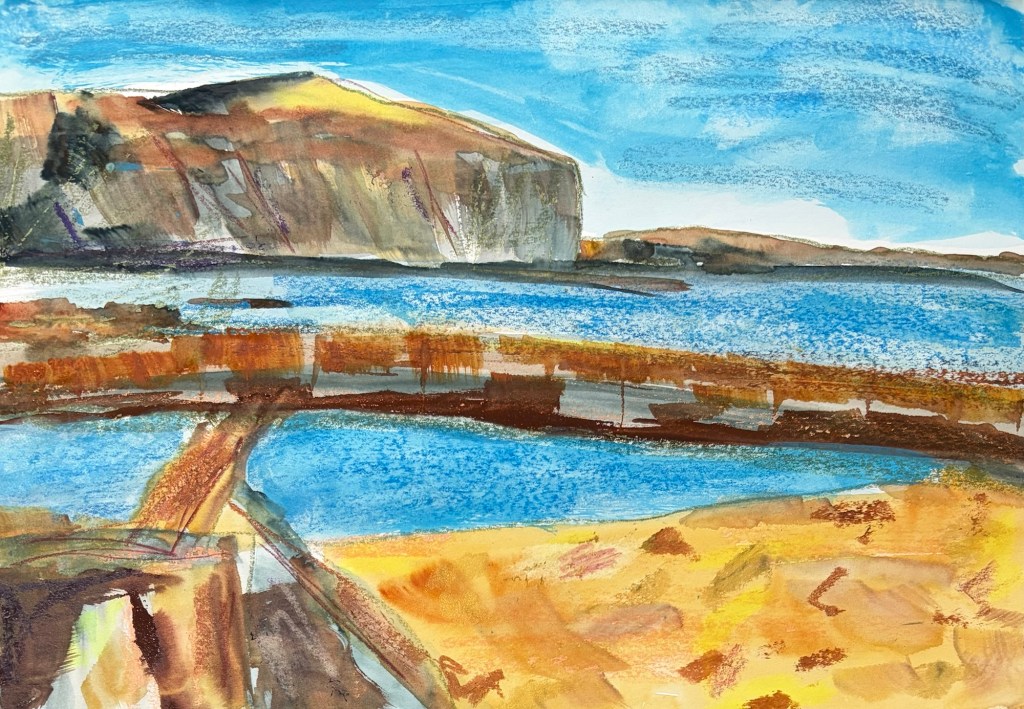
    My art is usually about my inner landscape, the seen landscape, and the remembered landscape, reshaped into a unified whole. Except at the moment there’s not a lot of unity.

    The world is a bit of a bonfire. Ok, more than a bit. In many ways it more like a giant dumpster fire, with an endless fuel supply. There’s little unity between people, countries, regimes…

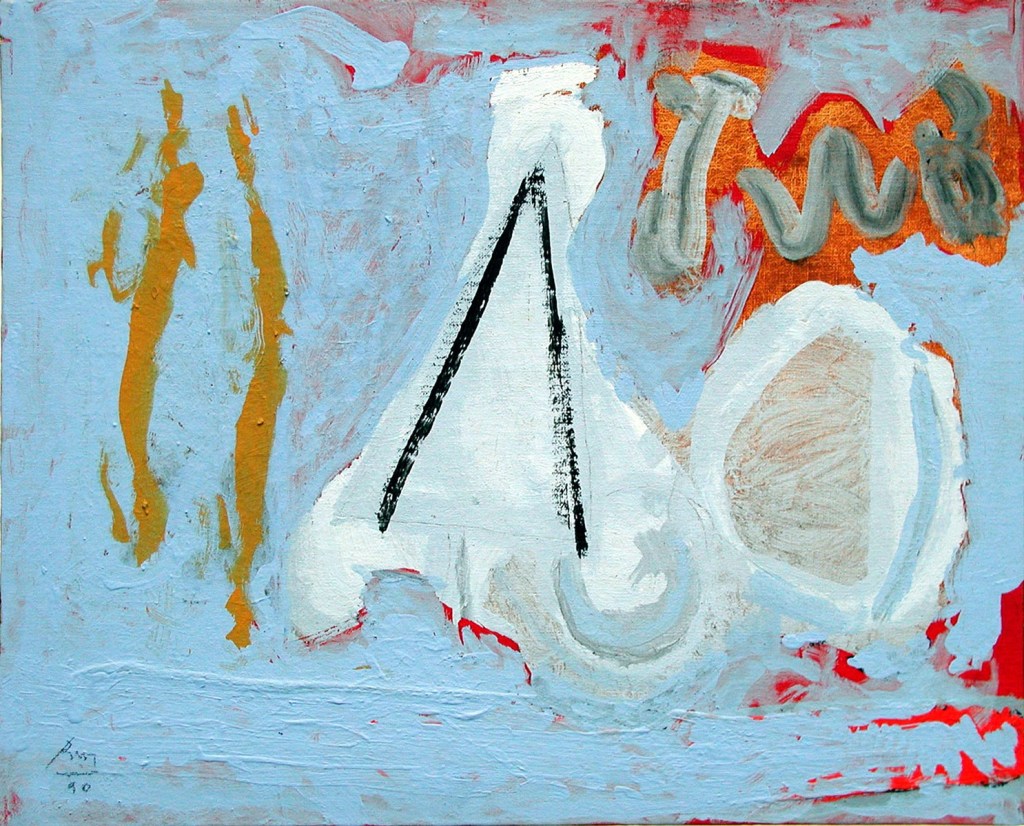
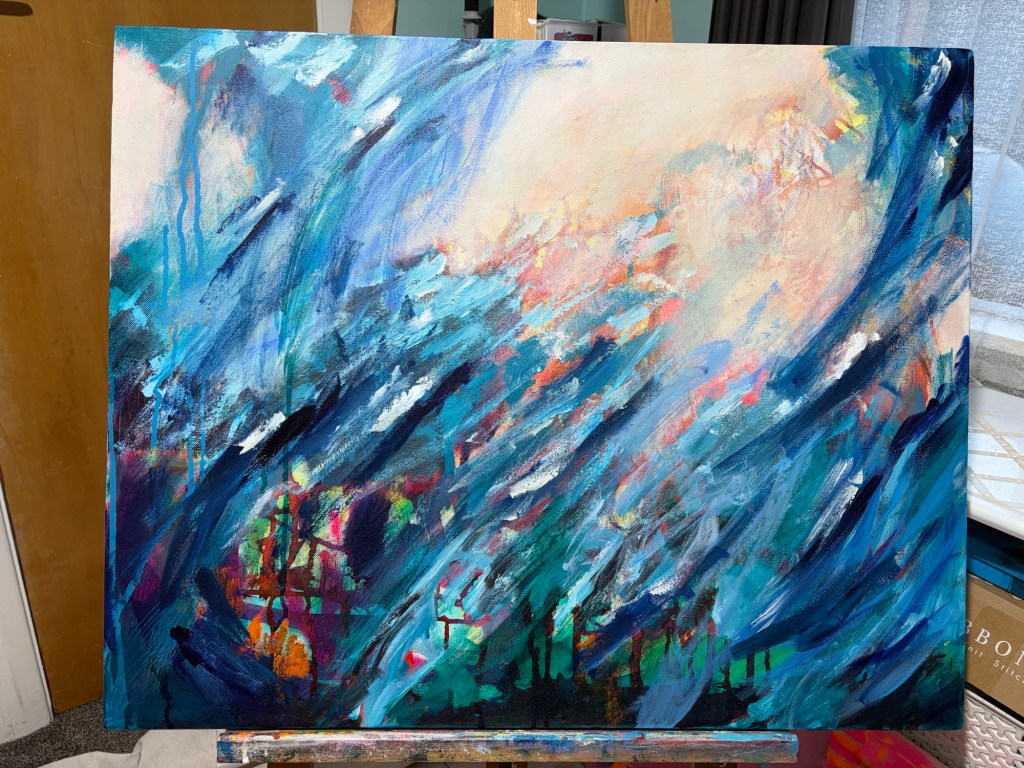
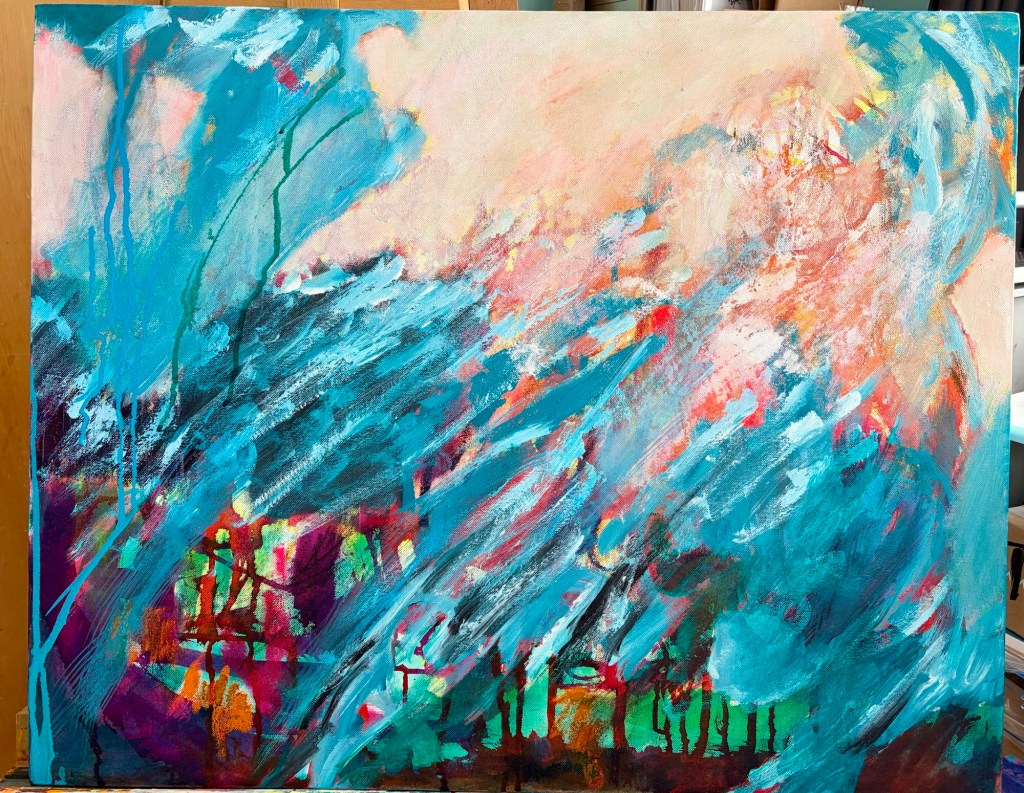
    What does that mean for my art? I’m still creating semi-abstract landscapes but there’s a chaotic energy about them. The land is fractured rather than peaceful. The landforms are bitsy and broken. I’m testing out using a limited triad colour palette, and that’s helping to create a little unity.

    On own land, on the other hand, is an oasis of calm … green paddocks, dense bush, a river, and contented cows. Is it out and out idyllic? No. There’s a lot of work to be done, and that’s ok. We have time, and it feels good to be out in nature away from the chaos of the world.

  • Find inspiration

    As artists, I think we have a choice. We can wait to be inspired, or we can seek inspiration. Inspiration doesn’t have to come from something incredible. It can be found in ordinary moments, in things we see as we drive to work, in our own garden, and the people and places we see.

    Recently, Alan and I bought a dairy grazing block. It’s 43 hectares with flat land, some native bush and rolling hills. There are around a hundred cows on the property, a stream, and some deer wander through … or perhaps live in the QEII area within the farm.

    For now we’re still living in my house, with messy gardens and a greenhouse. As the orchids start to flower, we bring them inside and enjoy seeing the blooms, which often last for weeks. In the last couple of days, the crocus have also started to flower in a small pot. The flowers are a pale lilac, and they’re delicate and beautiful.

    It’s not very often I paint flowers. I tend to be a semi-abstract landscape painter, using mixed media. Recently I’ve been exploring a limited color palette using 3 colors plus black and white. Although I don’t generally paint the flowers Alan grows, I know they inspire me in my color choices.

    One of the triad palettes I’m exploring at the moment is red-violet, blue-green, and Indian yellow. When I mix the red-violet with white, it’s the color of the crocus, and that’s no accident. Looking around me, there’s plenty to be inspired by, even as winter starts to bite. As artists, I feel part of our job is to mirror the beauty we see around us, particularly when the world feels dark and not so beautiful.

  • Landscapes for exhibition

    Landscapes for exhibition

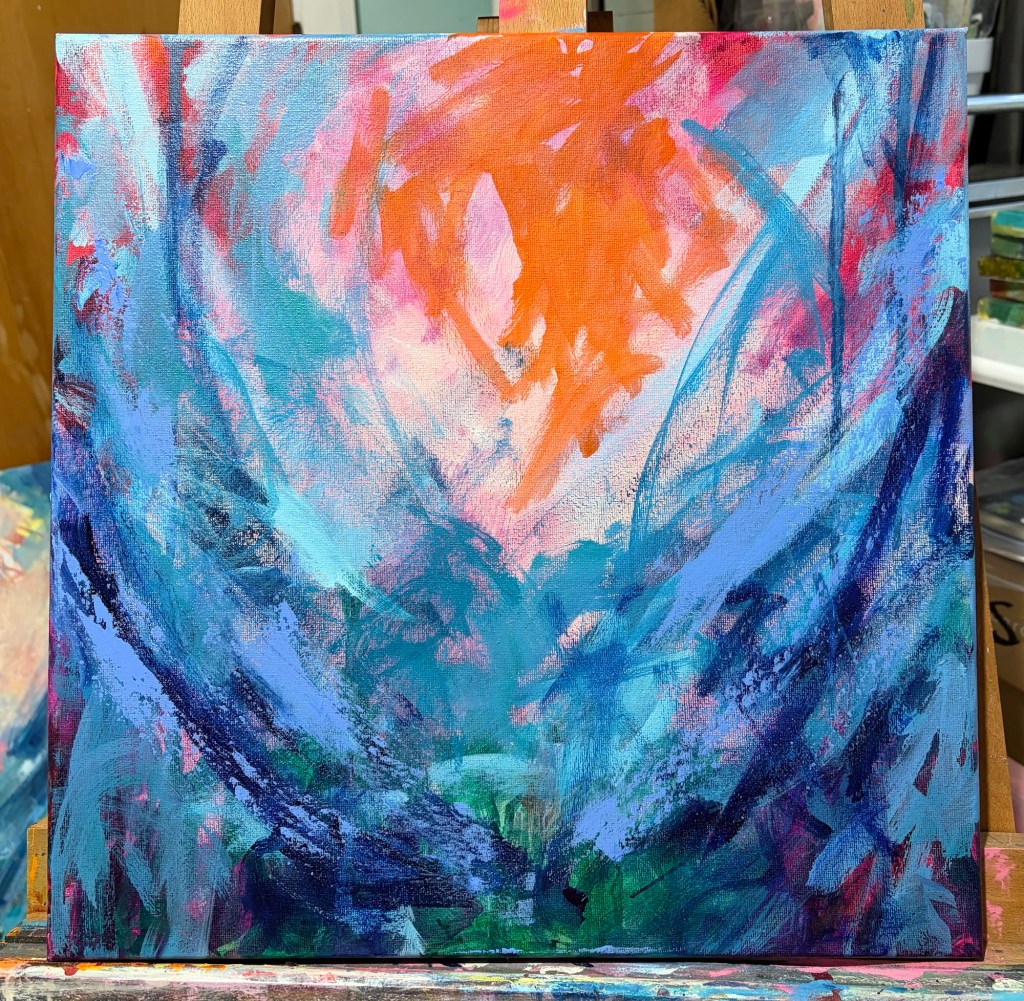
    Left Bank Art Gallery has a member’s exhibition coming up, ‘The sum of all parts’. I’m entering 3 20x20cm paintings floating in 30×30 wooden frames. It’s the first time I’ve used the floating frame set and love them.

    I’m a messy painter so covered all the wood in painter’s tape before I picked up a crayon or brush. It stayed clean, so was worth the effort.

    The process I used for the works was my standard semi-abstract process; paint, collage, more paint, more collage, mark making, (rinse and repeat) and final touches.

    I’ve been reading colour theory books and testing some limited colour palettes. I settled on orange, deep violet and sap green for this trio. I’ve also been playing with red violet, blue green and Indian yellow.

    The advantage of a limited palette is really understanding what the colours can do. Once you settle on one or two limited palettes, you can buy those six colours in all the materials you like – acrylic, watercolour, ink, oil pastels, crayons, pencils… You get the idea!

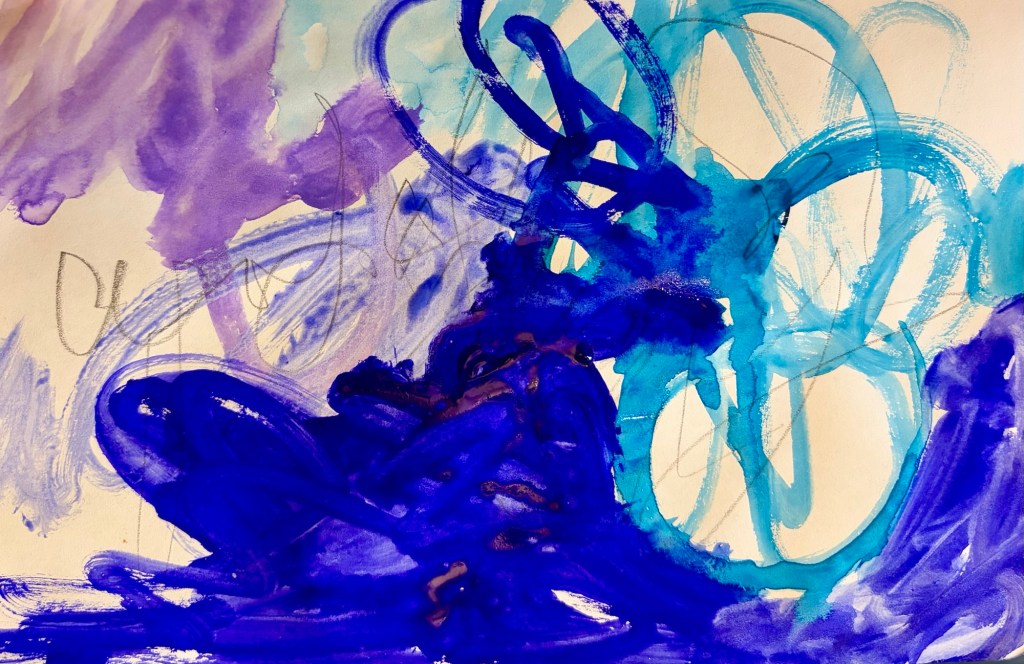
    Working with so much blue around them was disconcerting!
  • Stencilled tissue paper

    Stencilled tissue paper

    I’ve been watching Melissa Reed on YouTube and love the way she colours tissue paper with acrylic inks. I’ve had time off work after getting significant liquid nitrogen done on my face, so yesterday grabbed some inks & stencils for play time.

    I used her basic technique but did it my way. I put the tissue paper on A3 laminating pouches then wet down using my sprayer bottle. I put stencils down and rolled with a brayer to adhere to the tissue. I added drops of acrylic inks, sprayed again & tipped a bit if needed, then left to dry.

    I love how vibrant the final tissue sheets are. The front is more muted, and the back is shiny due to being against the laminating pouch plastic. This is a technique I’ll be using again, that’s for sure.

  • Noticing, and muscle memory

    Noticing, and muscle memory

    I wrote here about one of the Sketchbook Revival 2026 lessons that grabbed my attention – visual prompts with Jane Davies. I quickly filled 3 sketchbooks with prompts… just two pieces of collage per page to respond to. I’ve been working through the first sketchbook over the last couple of weeks, and completed it today.

    I love this exercise because it builds muscle memory, training my hand to easily make the shapes that are uniquely mine as an artist. It stretches me as an artist, thinking how to respond to the start in a way that’s true to me. Looking through the completed sketchbook is a tour through my visual language, a reminder of the colors, shapes and lines that call to me in my work.